Sea otters spend much of their time at sea and rarely come ashore; typical river-otter habitat includes water and land with a den. Check the named species before adding specific foods or family-life details.
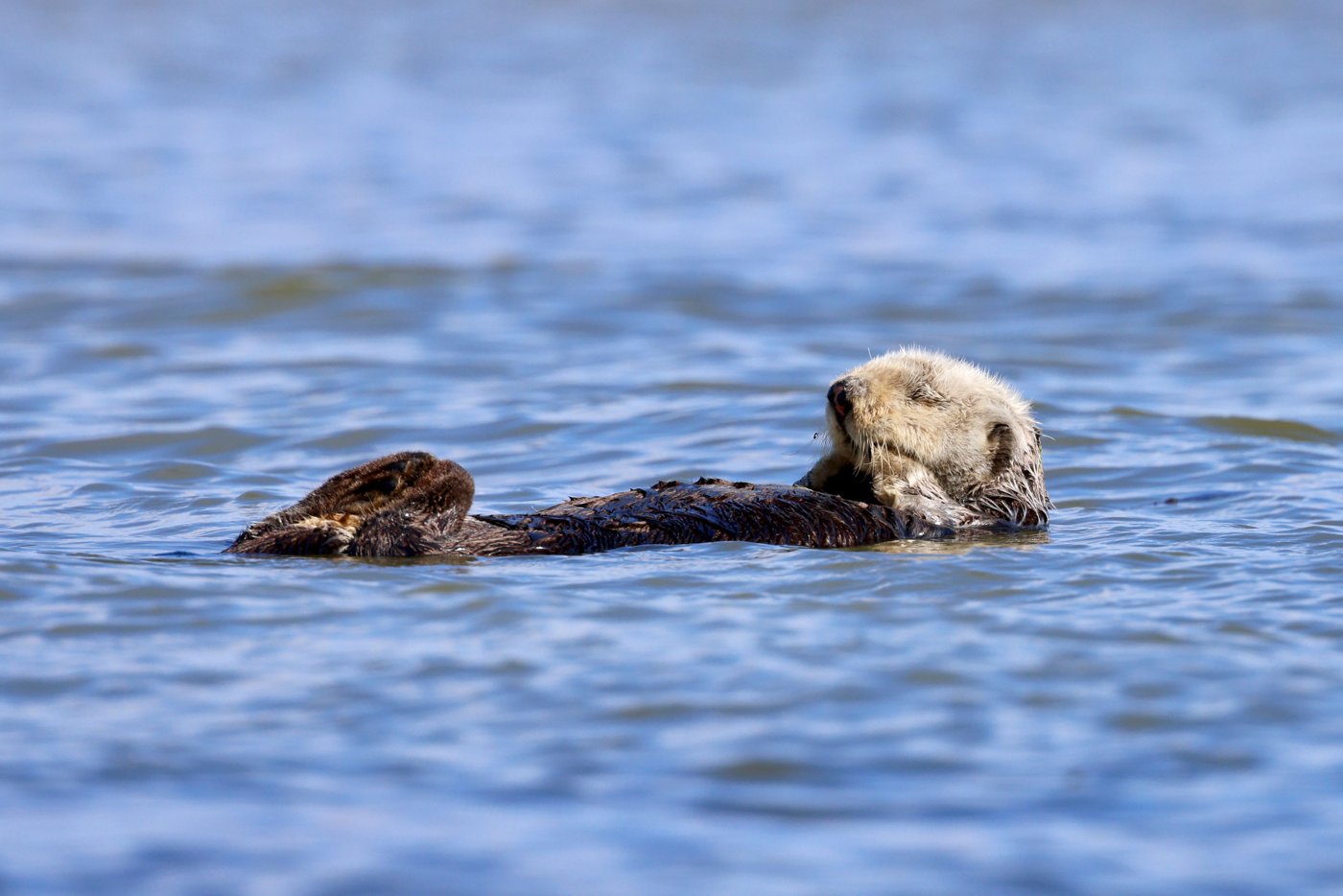
“Otter” names a group of animals rather than one identical way of life. A sea-otter photograph may show floating, while a river-otter reference may include a bank and den. Begin with the named animal so a broad category does not become a misleading universal description.
Read a habitat comparison
San Diego Zoo Wildlife Alliance’s otter guide describes typical otter habitat as both water and land, with sea otters rarely coming ashore. It describes river-otter territory with a den and places for grooming and feeding. Use those broad differences for the scene comparison; additional details should come from a clearly named species.
Notice what the photograph actually shows
The credited stock photo is described as a southern sea otter at Moss Landing, California. It shows the animal floating on its back in blue water. It does not show a river den, a pup, or a feeding tool in use, so leave those observations out of the image description.
A child may invent a stone, a boat, or a companion nearby. That is an available story choice; do not say the added detail was present in the source photograph.
Draw two environments with clear labels
- Divide paper into “Sea otter example” and “River otter example.”
- Draw water across the first scene and add an original floating otter.
- Draw a bank beside water in the second.
- Add a simple den symbol to the river scene.
- Use a caption to say these are simplified habitat models.
You are not designing an enclosure or habitat for a real animal. The drawings show selected source-based clues, not complete care requirements.
Compare the scenes without a memory test
| Scene feature | Question |
|---|---|
| Water fills most of the sea scene | Where did you put the animal? |
| A bank and den appear in the river scene | Which land feature did you include? |
| Both drawings are simplified | What would need another source? |
Let the child point to a feature, describe a drawing choice, or add a question mark for something unknown. Two short observations are enough.
Frequently asked questions
Are all otters the same size?
No. Use a species-specific reference if you want a size comparison. These sketches are not drawn to scale.
Can we put any otter photo in either scene?
Use the source’s species description when available. An unidentified otter picture should remain unidentified rather than receive a confident new label.
Does floating mean the animal is asleep?
Not necessarily. A still image does not establish sleep. Describe the pose visible in the photograph.
Is the activity an ocean coloring lesson?
It focuses on named habitat examples. An imaginary ocean story is a different optional project.
A coloring option to inspect together
If your child wants an animal outline after this activity, look at the real pages before choosing a book. Preview Baby Animals, the first adventure presented in Little Wonder Club’s Wild Little Wonders series. The current site lists an English 8.5 × 11-inch paperback for ages 4–8, with 40 baby animals, short facts, and 88 total pages. These companion activities are original journal ideas; check the preview for the book’s actual contents.
View the paperback and current ordering details on Amazon.
Keep exploring
Illustrative stock photograph by Chris Spain on Pexels, under the free Pexels License. It does not show our book or demonstrate the exact activity. Sources and book details checked October 12, 2026.
Explore Baby Animals
See the actual inside pages before deciding whether the book fits your child.
Check the paperback on Amazon